
SEO and Content Marketing
Introduction
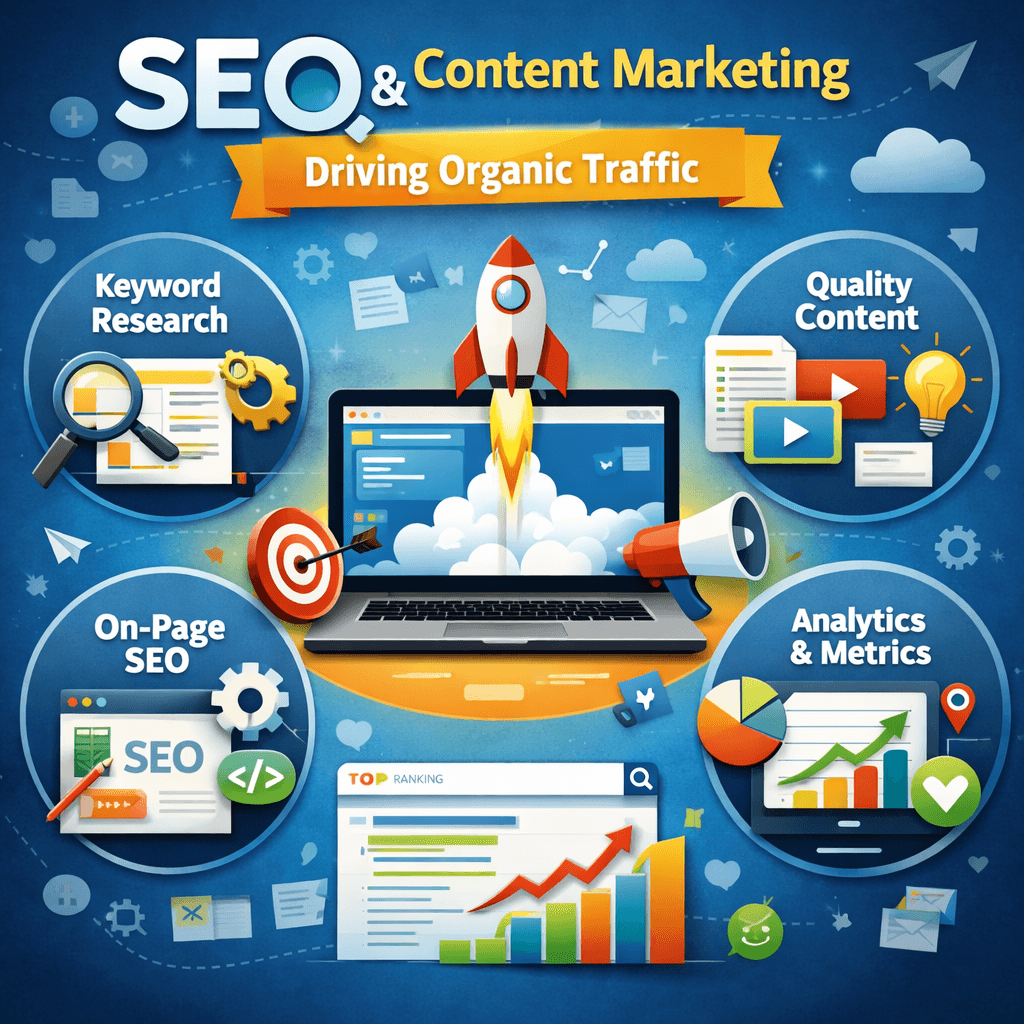
Building online visibility is harder than ever. Millions of websites compete for attention, yet only a few appear on the first page of search results. This is why SEO and Content Marketing matter so much.
SEO and Content Marketing: A Complete Guide to Driving Organic Traffic shows how businesses can grow website traffic without paid ads. Instead of quick wins, this approach focuses on long-term growth. When SEO and content work together, they help you attract the right audience at the right time.
Search engines reward helpful, relevant, and well-structured content. Content marketing creates value for users, while SEO ensures that value gets discovered. Together, they build trust, authority, and steady organic traffic.
What Is SEO and Why Does It Matter?
SEO, or Search Engine Optimization, is the process of improving your website so search engines can understand it better. The goal is simple: rank higher in search results and attract more visitors.
SEO includes:
Keyword optimization
Page structure
Mobile responsiveness
Page speed
Internal linking
When your site follows SEO best practices, search engines see it as reliable and useful. This increases your chances of ranking higher over time.
What Is Content Marketing?
Content marketing focuses on creating useful and engaging content for your audience. This content can include:
Blog posts
Guides
Videos
Infographics
Case studies
Instead of selling directly, content marketing educates and builds trust. When users find answers on your site, they are more likely to return and take action later.
Why SEO and Content Marketing Work Better Together
SEO and content marketing are strongest when combined. SEO tells you what people are searching for. Content marketing helps you create answers to those searches.
Understanding Search Intent
Search intent explains why someone searches for a keyword. There are three main types:
Informational
Navigational
Transactional
Content that matches search intent performs better in search results. When users find what they need quickly, they stay longer and engage more.
How Quality Content Boosts SEO Rankings
High-quality content improves:
Time on page
User engagement
Backlinks
Search visibility
Search engines now prioritize people-first content. This makes content quality more important than keyword repetition.
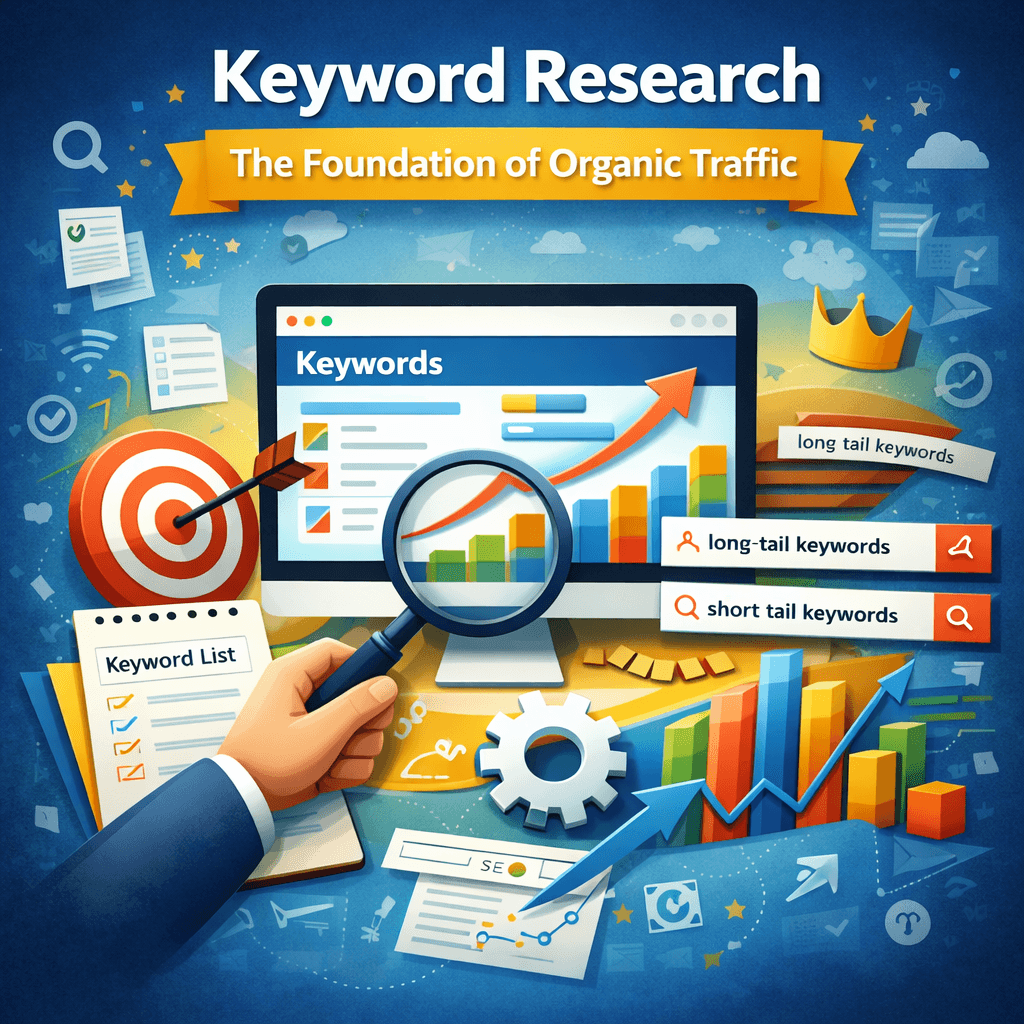
Keyword Research: The Base of Organic Traffic
Keyword research helps you understand what your audience is searching for. It guides your content strategy and improves relevance.
Short-Tail vs Long-Tail Keywords
Short-tail keywords are broad and competitive.
Long-tail keywords are specific and easier to rank for.
Using both helps attract traffic at different stages of the buyer journey.
Semantic Search and Topic Relevance
Search engines now understand context. This means you should cover topics fully, not just repeat keywords. Related terms and clear explanations help improve rankings.
On-Page SEO Best Practices for Content
On-page SEO improves how individual pages rank.
Optimizing Titles and Headings
Use the focus keyword naturally
Keep titles clear and engaging
Structure content with H2 and H3 headings
This improves both SEO and readability.
Internal Linking and Content Flow
Internal links guide users and help search engines crawl your site. They also increase time spent on your website.
Creating High-Quality, SEO-Friendly Content
Content should be easy to read and helpful.
Content Types That Drive Organic Traffic
Some effective formats include:
How-to guides
Tutorials
FAQs
List posts
Visual elements like images and videos improve engagement.
Writing for Users First
Short sentences and simple language improve readability. Clear examples and a friendly tone keep users engaged while still supporting SEO goals.
Technical SEO and Content Performance
Technical SEO supports your content behind the scenes.
Page Speed and Mobile Optimization
Fast-loading pages improve user experience. Mobile-friendly design is essential since most searches happen on mobile devices.
Crawling and Indexing
Clean URLs, proper sitemaps, and logical navigation help search engines index your content efficiently.
Promoting Content for Maximum Reach
Publishing content is only the first step.
Social Media and Email Marketing
Sharing content on social media and through email increases visibility and drives referral traffic.
Earning Backlinks Naturally
High-quality content attracts backlinks. Backlinks increase authority and improve rankings. Trusted SEO guidelines like Google Search Central support this approach.
Measuring SEO and Content Marketing Success
Tracking results helps you improve strategy.
Important SEO Metrics
Key metrics include:
Organic traffic
Keyword rankings
Bounce rate
Conversions
SEO Tools for Tracking Growth
Analytics tools provide insights into user behavior and content performance.
Common SEO and Content Marketing Mistakes
Avoid these mistakes:
Ignoring search intent
Publishing thin content
Skipping content updates
Keyword stuffing
Consistency and quality always win.
Future Trends in SEO and Content Marketing
AI search, voice queries, and experience-based content are shaping the future. Websites that focus on helpful, trustworthy content will continue to grow.
Frequently Asked Questions (FAQs)
1. How long does SEO take to work?
Most websites see results within three to six months.
2. Can content marketing work without SEO?
It can, but SEO increases reach and visibility.
3. How often should I publish content?
Focus on quality. Consistency matters more than volume.
4. Are backlinks still important?
Yes. Quality backlinks remain a strong ranking factor.
5. Should old content be updated?
Yes. Updates improve relevance and rankings.
6. Is SEO still worth it in 2026?
Absolutely. Organic traffic remains one of the best long-term marketing channels.
Conclusion
SEO and content marketing are not quick fixes. They are long-term strategies that build trust, authority, and steady traffic. When combined correctly, they create sustainable growth for any business.
By following this SEO and Content Marketing: A Complete Guide to Driving Organic Traffic, you can improve rankings, attract the right audience, and grow your online presence the smart way.
Informative 👍👍
Visiting here was good experience
One of the best website i have visited clean design and easy navigation
An excellent and professionally presented website with a modern design well structured layout. Highly recommended …visiting the site was a great experience
Great ! Your insights on development are spot‑on. Keep it up!
………………
An excellent and professionally presented website with modern design well structured layout…highly recommended visiting the site was a great experience